Iridium GMDSS: The Future of Global Maritime Safety and Communication Explained
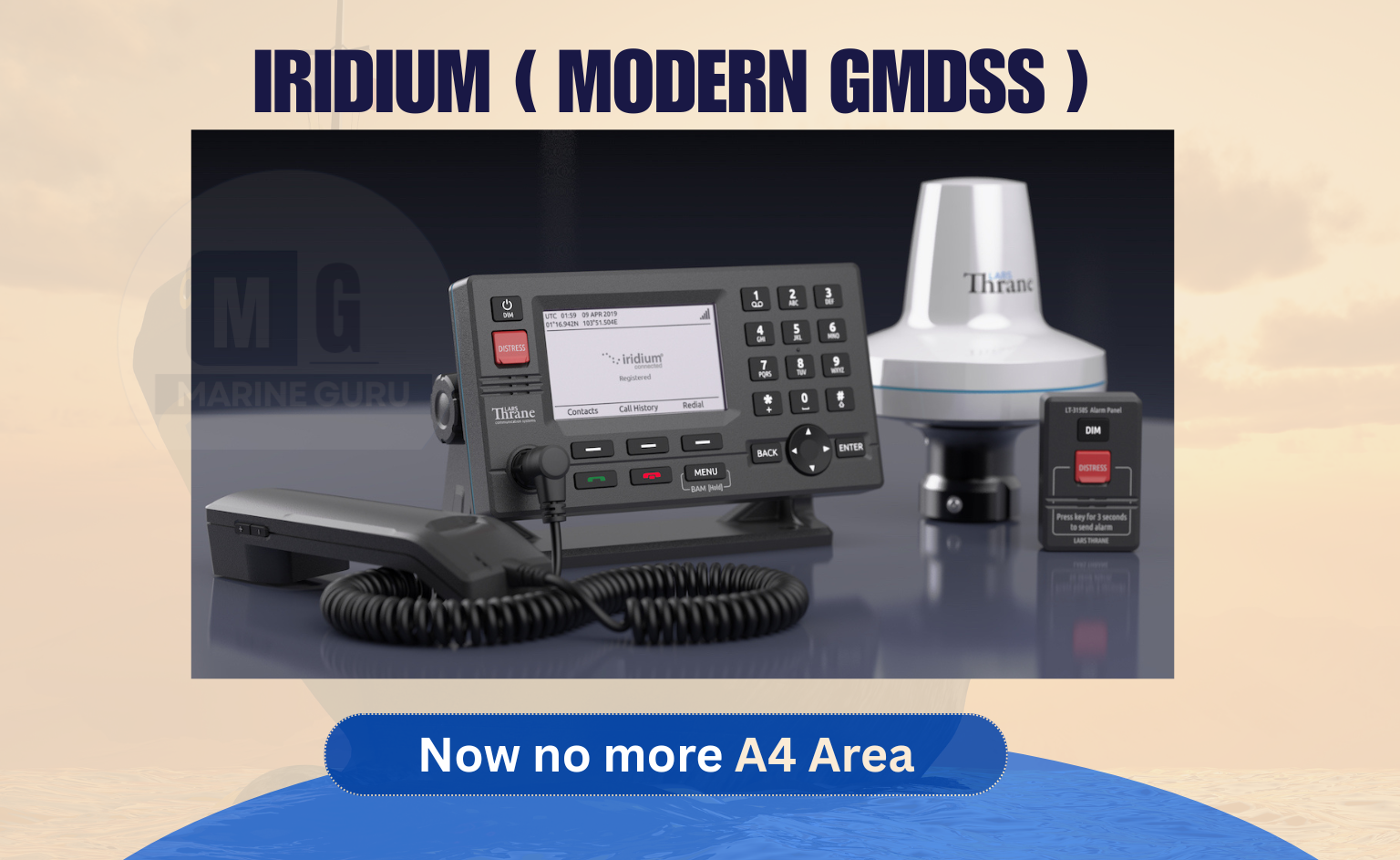
The ship’s bridge is the center of maritime operations, where traditional navigation meets cutting-edge digital technology. Among all modern systems, few have transformed maritime safety as dramatically as Iridium GMDSS. Offering true global coverage — including the polar regions — Iridium has become an essential component of bridge communication, supporting distress alerts, safety voice, and ship-to-shore data services.
Featured Snippet
Iridium GMDSS is a satellite-based maritime safety and communication system offering 100% global coverage, distress alerts, safety voice calls, and maritime safety information. Unlike traditional systems, it works even in polar regions, making it essential for ships operating worldwide and a modern alternative to Inmarsat-C for GMDSS compliance.
What Is Iridium GMDSS? (Simple Definition)
Iridium GMDSS is a satellite communication system approved by the IMO to provide mandatory maritime safety services, including distress alerts, safety voice, and Maritime Safety Information (MSI). Using 66 interconnected low-earth-orbit satellites, it offers complete global coverage — including Sea Area A4 near the poles.
Why Iridium Changed Maritime Safety Forever
✔ True global coverage (including Arctic & Antarctic)
Older geostationary satellites could not cover high-latitude regions. Iridium’s low-earth-orbit network provides full pole-to-pole coverage.
✔ Unique “Safety Voice” feature
Iridium is the only GMDSS provider that connects the vessel directly to RCC operators through a priority voice call after sending a distress alert.
✔ More resilient than geostationary systems
LEO satellites reduce weather interruptions and provide faster signal acquisition.
✔ Alternative to Inmarsat-C for new installations
For the first time, ships have a choice — Inmarsat or Iridium — for their satellite GMDSS terminal.

How Iridium GMDSS Supports Maritime Safety
1. Distress Alert (Mandatory)
One push of the red button sends
- ship’s identity
- GPS position
- distress nature
directly to the nearest Rescue Coordination Centre (RCC).
2. Safety Voice (Mandatory)
Immediately after the alert, the officer can speak directly to the RCC operator — essential during fires, flooding, or collision.
3. Maritime Safety Information (MSI)
Delivered through Iridium SafetyCast, including:
- navigational warnings
- weather updates
- storm alerts
- safety bulletins
4. Robust Redundancy
In dual-provider setups, Iridium is often used as a backup for Inmarsat or VSAT systems.
Iridium for General Bridge Operations
Beyond distress functions, Iridium supports daily communication through systems like Iridium Certus:
✔ Ship-to-Shore Voice & Data
Used for emails, voyage orders, updates, and routine traffic.
✔ LRIT Reporting
Transmits long-range identification and tracking data to the flag state.
✔ SSAS Alerts
Silent security alert to the CSO and authorities during piracy attempts.
✔ Remote Monitoring
Data for VDR, engine performance, and health reports.
Iridium vs Inmarsat-C: Comparison Table
| Feature | Iridium GMDSS | Inmarsat-C |
|---|---|---|
| Coverage | 100% global, including poles | No polar coverage |
| Satellite Type | LEO (780 km) | GEO (36,000 km) |
| Distress Alert | Yes | Yes |
| Safety Voice | ✔ Unique to Iridium | ❌ Not available |
| MSI Broadcast | SafetyCast | EGC (Inmarsat) |
| Latency | Low | High (GEO delay) |
| Ideal Use | Global and polar voyages | Most commercial shipping routes |
Real-Life Scenario 1:
Distress Emergency Using Iridium GMDSS
Situation:
A cargo vessel in the Arctic Ocean strikes ice, causing rapid flooding in the forward holds.
How Iridium GMDSS is used:
- Officer presses the Distress Button on the LT-3100S terminal.
- Vessel’s GPS position and identity are instantly sent to the nearest RCC.
- The bridge receives confirmation of the alert.
- The officer picks up the Safety Voice handset, automatically connected with priority routing.
- The RCC operator requests details:
- flooding status
- number of persons on board
- available lifeboats
- weather conditions
- RCC dispatches the nearest icebreaker and rescue aircraft.
- MSI updates arrive via SafetyCast, showing weather and ice movement.
Outcome:
The combination of instant distress, direct voice, and global coverage ensures rapid rescue coordination — something impossible with older non-polar-capable systems.
Real-Life Scenario 2:
Routine Daily Operations Using Iridium
Situation:
A container ship is mid-ocean, updating its office about ETA and cargo status.
How Iridium is used:
- Officer sends voyage updates via Iridium Certus email channel.
- LRIT position is automatically transmitted to the flag state.
- The company downloads VDR performance logs via the Iridium data link.
- Weather routing data is received through SafetyCast.
Outcome:
Iridium keeps the bridge connected even when VSAT or coastal networks are unavailable.
Why Every Modern Ship Should Have Iridium GMDSS
- Required for voyages in Sea Area A4
- Strong redundancy even in non-polar areas
- Clear RCC communication via Safety Voice
- Reliable in rough weather and high seas
- Essential for modern compliance and risk reduction